

Hi Everyone! I hope you all are doing great.
I am back with another academic-related post. This is personal to me so please note that some of you may or may not find this useful or helpful.
I am just throwing out some key brief tips that helped me during my undergraduate years at university and how I managed the stress and pressure of assignments by following these tips that I am about sharing!
Nonetheless, I hope some of you find these useful and helpful!
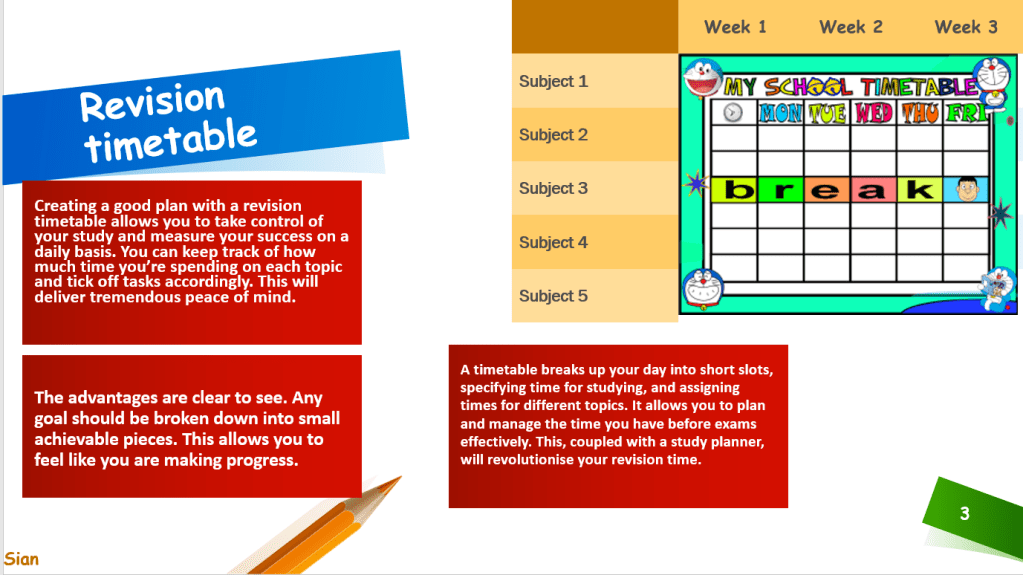
Revision Timetable
If I am being brutally honest, Revision timetables NEVER worked for me. It didn’t take me long to figure out once I noticed that I was quick to forget about them and that I never followed through with it 😀 However, it worked for many other students. Hence why I would suggest it as it may or may not be for you.
Personally, for me, I always started my assignments the week after it was given and would touch on them every day or every other day.
At the end of the day, do what is best for you and what you know works well.
Independent and Group study
If you ask me, I have always found the two very helpful as they are unique in their own ways. But if you were to ask me to choose between the two, which I preferred, I would have to say Independent study. Why? Because you have a sense of peace when you are in your own zone and bubble and figuring things out on your own. This doesn’t mean that I do not seek help or ask questions when I get stuck, but it allows me to understand myself more and be less likely to be distracted by the people around me and do things at my own pace. With that being said, group study is still as beneficial as you all learn and bounce off each other and sometimes, if one is falling behind, the other group buddies can motivate and encourage you.
It just depends on how you look at it and what you prefer and know works best for you. Everything has its pros and cons.
Me, I am adaptable, but I do love being in my own space.

PREPARATION and ORGANIZATION
•Timing management and Organization are very key to providing a much more structured schedule. It also causes less stress or mistakes from occurring. It will allow you more time to plan ahead, especially if you need your tutor
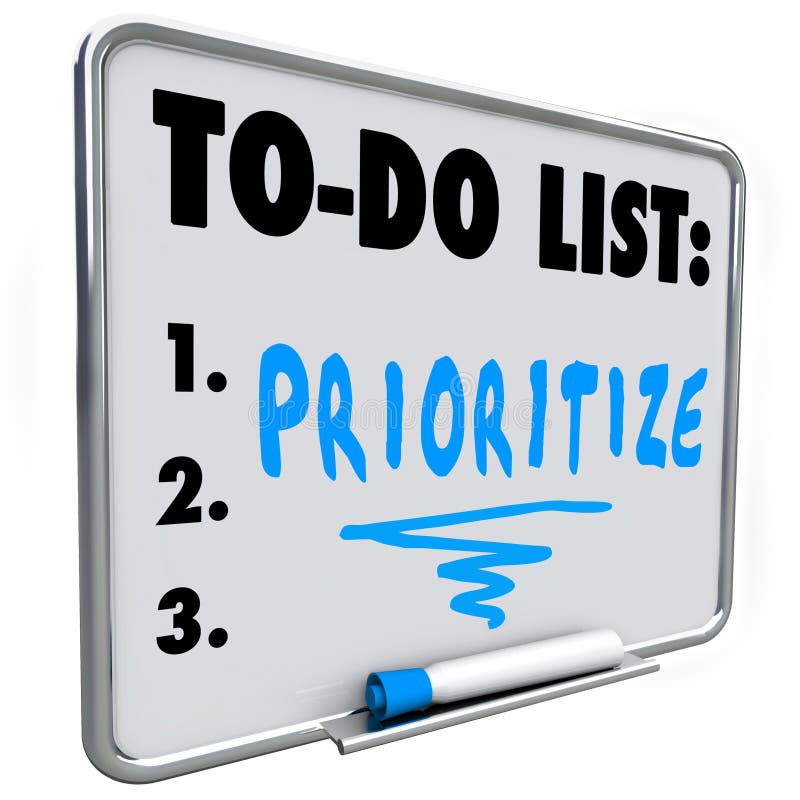
•Prioritise accordingly – Once you’ve decided what your specific problems/interests are, you can draw up a list:
What needs to be addressed urgently?
Whatever your subject is, don’t be scared or worried to return to the basics if necessary. It may give you more confidence, in the long run, to ensure that you have a firm understanding of basic concepts and of the topic/s taught.
•Tackle the hardest task first – Sometimes, if not all the time, we tend to go for the thing that requires minimal effort and time. That is understandable as it is quick and the task is fairly straightforward and easy. But take note, when we leave the ‘hardest’ or ‘most challenging’ task last, we tend to struggle more and find it almost ‘impossible’ to complete because it takes a little more time, effort, planning, studying and understanding. In my opinion, from experience, it is better to tackle those kinds of tasks first as it would make so many things a lot better and easier to manage and the best thing about it all is that the toughest and most stressful one is OUT OF THE WAY!
•Be aware of your deadlines on projects, exams or some tasks at University.
•Read articles related to your studies
•Setting realistic goals – S.M.A.R.T (specific, measurable, attainable, relevant and time-bound)
•Take at least 2 hours for each subject to revise/catch up on. Even if that means 30mins-1hr reading the content and gaining some understanding and knowledge and the next 1-2hrs taking notes and summarising •Writing a revision booklet – I personally found this useful. However, I did not finish writing them (Life gets in the way sometimes)
•Sticky notes and put them on some of the printed pages of the modules/lectures you have.
•Finding study buddies!!!!
•Scheduling in some time you will take out to study, revise and catch up on work
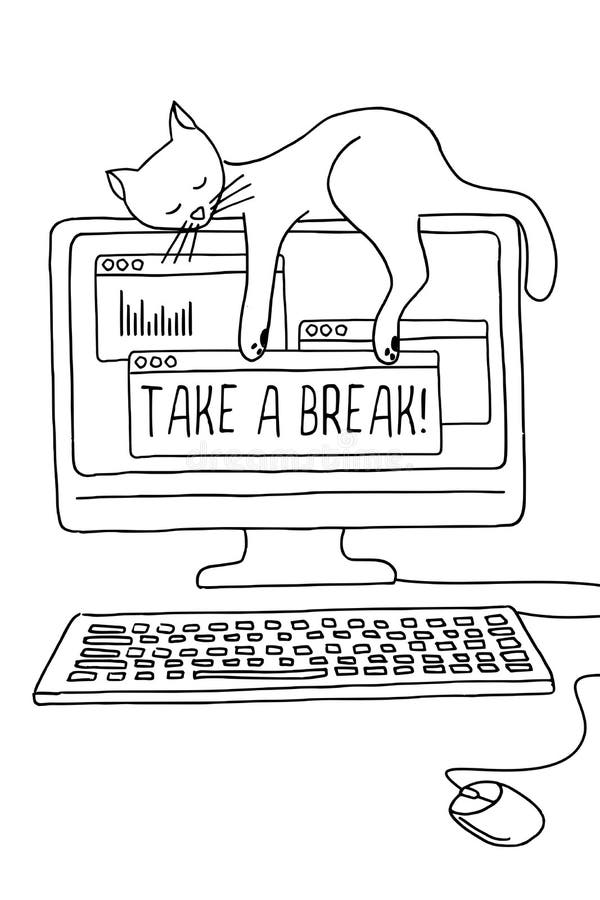
•Going to the library (it does motivate you to keep going as you’re not in your comfortable environment) •TAKING BREAKS INBETWEEN && AVOIDING DISTRACTIONS. Take time to clear your mind. It is very important if you want the quality of your work to be as good as gold. If you set something out for yourself to do, then make sure you do it without letting external factors hinder or prevent you from doing so.
•Always going back to the pre-recorded lectures and watching them (if they have been pre-recorded so it’s out there! Take advantage of it and see it as a positive thing)!
•Doing some extra research to add to your revision notes and lectures. Sometimes the lectures do not always give you all the information because they expect you to do the rest as individual autonomous learners!
•Setting too many overly ambitious goals, and you’ll just get used to the idea that you won’t reach them and gradually stop trying to, which is unproductive.
•When others are ‘sleeping’, not ‘studying’ or ‘chilling’, be the one who stays up for a little while longer to catch up on some work and do extra studying.
•Knowing what is more important and getting that done first before engaging in the extra and not-so-important stuff.
FEEDBACK
Understanding feedback
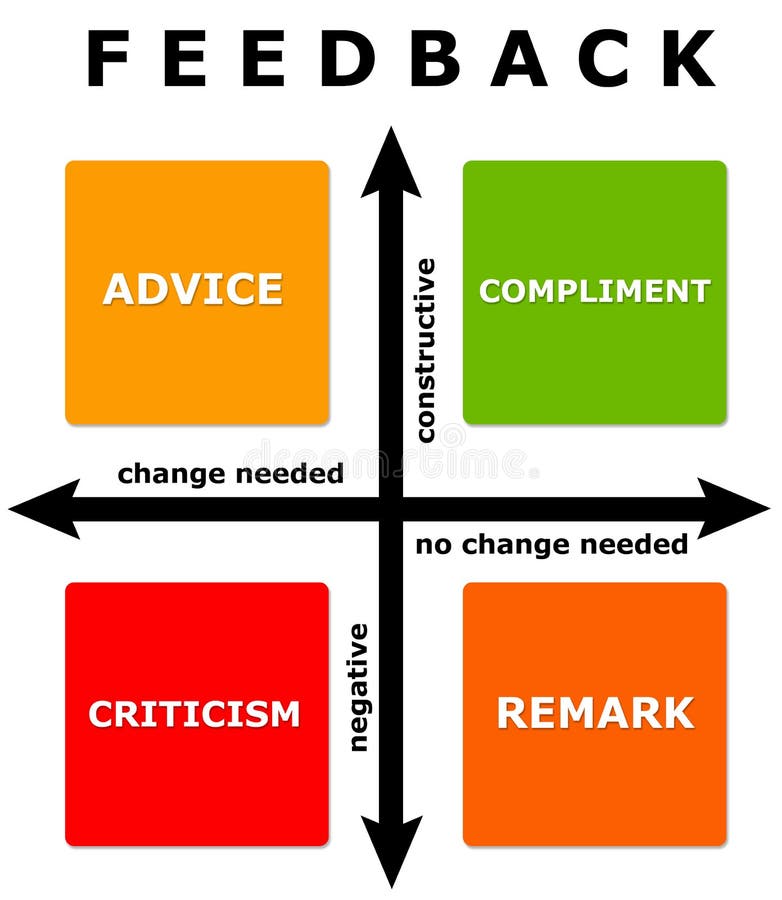
•Constructive feedback not only lets you know what is right and what is wrong but provides suggestions on how you can approach the various points raised.
•Effective feedback helps you to understand what you did well and what you could do better. Once you know what was good and what wasn’t, you can adapt your behaviour and work to improve it. Thus, feedback is a key tool for improving both individual and team performance.
Applying feedback
•Encourages you to think critically about your work and to reflect on what you need to do to improve it. •What lectures advise, signpost and encourage you to do, you should make sure in your next essay/assignment, that you have achieved it. This may help you gain higher marks.
•Taking into consideration what they have ‘correct’ you on and making those changes in your learning to reflect this.
KNOWING YOUR LEARNING STYLE
There are different types of learners. The 4 main are:
Visual (spatial) – People who learn when they see or watch something. This could be presented in the form of videos, colours, pictures, symbols, diagrams etc.
Auditory – (AKA aural) learn by listening and hearing information.
Writing/Reading – These are the people who learn by reading and writing information. This can be presented in the form of handwritten notes on paper, PowerPoint presentations, (revision) booklets, word documents. Sometimes it can be leaflets or handouts.
Kinesthetic – The learners who are hands-on and learn practically and through actions.
Understanding your learning styles can help you become aware of and understand your strengths and weaknesses. So make sure you have an idea of how you absorb information and learn as this will help improve your revision and learning techniques.
The additional different learning styles can be found in the image below…

What is your best learning style? What is your least learning style?

 Transparency Talks Truth